
Choosing Between Plain and Diamond Wedding Bands
You may know exactly what you want in an engagement ring, then find yourself surprisingly undecided when it’s time to pick the wedding band. A plain band offers a clean, timeless look, while diamonds can add shimmer and brilliance. When choosing between plain and diamond wedding bands, it’s worth thinking about how each option will look, feel, and fit into your everyday life.
Compare Plain and Diamond Bands
Plain and diamond wedding bands can create very different looks, but appearance isn’t the only distinction. Understanding what each style offers gives you a useful foundation before you consider factors such as comfort, maintenance, and how the band pairs with your engagement ring.
What Plain Bands Offer
Plain wedding bands keep the focus on the metal, shape, and finish rather than added gemstones. The finish can noticeably change the ring’s overall look, from sleek and reflective to more subtle or handcrafted.
Here are some common wedding band finishes:
- A high-polish finish has a smooth, reflective surface with a bright, classic appearance.
- A brushed finish features fine directional lines that create a softer, more contemporary look.
- A matte finish has a low-shine surface that gives the band an understated, modern feel.
- A hammered finish uses small indentations to create visible texture and natural variation.
- A textured finish incorporates decorative surface details or patterns that add character to the metal.
What Diamond Bands Offer
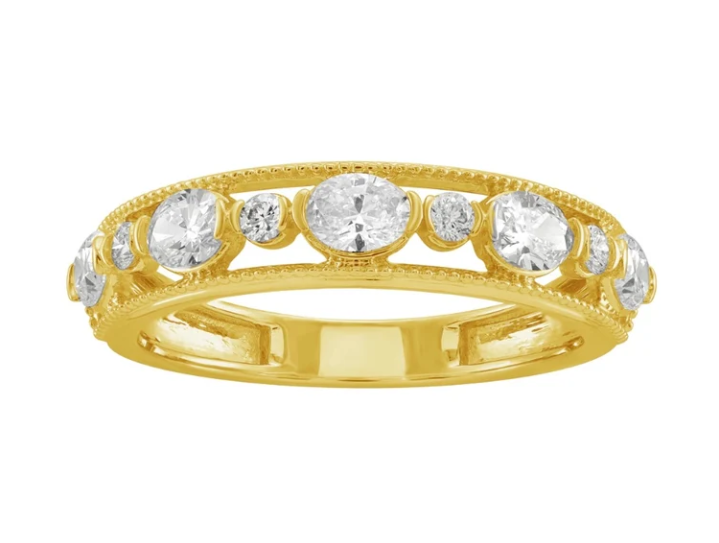
Diamond wedding bands introduce sparkle and texture. Some designs feature only a few diamond accents, while others carry stones across much of the band. The size and spacing of the diamonds can shift the look from delicate to more dramatic. This flexibility makes a diamond band a strong option if you want your wedding ring to contribute more visual detail to the overall set.
Consider Your Personal Style

Rather than choosing based only on tradition or trends, think about the jewelry you already enjoy wearing. If your style leans toward clean lines, simple shapes, and polished or brushed finishes, a plain band may feel like the more natural choice. It can also work well if you prefer an understated look that pairs easily with other jewelry.
If you’re drawn to decorative details, mixed metals, texture, or visible sparkle, a diamond band may suit your style better. You can keep the look subtle with a few small stones or choose a design with more noticeable brilliance.
Pair With Your Engagement Ring
If you plan to wear your engagement ring and wedding band together, consider how they’ll look and feel as a set. The shape, metal, width, and amount of detail can all affect the overall pairing. At Kennedy’s Jewelers, we can help you choose a wedding band that looks beautiful with your engagement ring. Visit us in person to compare wedding bands in Kansas City and see how different styles look on your hand.
Mix or Match the Metal
Using the same metal can give your rings a more cohesive appearance. For example, a white gold wedding band can blend naturally with a white gold engagement ring. You can also mix metals if you prefer a more distinctive look. The best choice depends on whether you want the rings to coordinate closely or feel more individual.
Balance the Amount of Detail
An intricate engagement ring may pair well with a simpler wedding band that keeps the overall look from feeling too busy. A plain band can provide contrast while still complementing the engagement ring. If your engagement ring is more minimal, a diamond band can add extra sparkle and visual interest. Think about how much detail you want to see when both rings are worn together.
Consider the Band Shape
Some engagement ring settings allow a straight wedding band to sit closely beside them. Others have a center setting that extends outward, which can prevent a straight band from sitting flush against the engagement ring. In those cases, a curved or contoured band may fit more naturally around the engagement ring. Trying different shapes together can show you which option creates the look you prefer.
Compare Width and Proportion
The width of each ring can affect how balanced the set looks on your hand. A very wide wedding band may compete with a delicate engagement ring, while a narrow band may create a lighter, more subtle pairing. You can also choose similar widths if you prefer a more uniform appearance.
Diamond Setting Styles

Choosing a diamond band involves more than deciding how much sparkle you want. The setting affects how the stones are arranged, how much metal remains visible, and how the ring looks from different angles.
Pavé and Shared-Prong Settings
Pavé settings use small diamonds placed closely together to create a fine, continuous shimmer across the band. Shared-prong designs allow neighboring diamonds to use some of the same prongs, which can reduce the amount of visible metal between stones. Both styles can create a bright appearance, but the effect changes depending on diamond size and overall band design.
Channel-Set Diamond Bands
Channel-set bands place diamonds between two borders of metal instead of securing each stone with prominent individual prongs. The result is typically a smoother, more structured appearance with clearly defined edges. Because more metal frames the diamonds, these bands can have a stronger geometric quality than some pavé or prong-set designs.
Bezel-Set Diamond Bands
Bezel settings surround each diamond with a thin rim of metal rather than holding it with prongs. This creates a smooth, defined look and keeps more metal visible around each stone. Bezel-set bands can feel especially sleek and modern compared with pavé or shared-prong styles.
Flush-Set Diamond Bands
Flush-set diamonds are placed directly into the surface of the band, so the stones sit nearly level with the metal. The result is a subtle look with less exposed stone and a smoother profile. This style can create a more streamlined appearance while still adding visible diamond accents.
Plan for Care and Maintenance
Plain and diamond wedding bands may need different types of care as they age. With regular wear, a plain metal surface can develop fine scratches or changes in its finish, especially if it began with a high polish. Depending on the metal and finish, periodic professional care can restore or refresh its appearance.
Diamond bands add settings and stones that also need occasional attention. Oils, lotion, and everyday residue can collect around the diamonds and make them look less bright until the ring is cleaned. Periodic inspections are also useful for checking the condition of the settings and identifying any areas that may need service.
When deciding between a plain and diamond wedding band, focus on the details that will shape your everyday experience with the ring. Think about how it looks beside your engagement ring, how it feels on your hand, and whether the design fits your personal style. Seeing different options in person can make design differences easier to appreciate. The right band should feel like a natural addition to the jewelry you already love.