
Wedding Band Materials Beyond Traditional Metals
Choosing a wedding band involves more than finding a design you love, especially when you plan to wear it every day. Gold and platinum are familiar choices, but they're far from the only options available. Exploring wedding band materials beyond traditional metals introduces you to rings with different weights, textures, and durability characteristics. Compare materials to choose a band that suits your style and routine.
Tungsten Carbide
Tungsten carbide is known for its exceptional scratch resistance. It also has substantial weight, making it feel noticeably heavier than materials like titanium. You'll find tungsten carbide rings in various finishes, from reflective silver tones to brushed surfaces and darker colors.
Although tungsten carbide is extremely hard, it isn't indestructible. The material is relatively brittle, so a strong impact can crack or shatter it rather than bend it. Keep this in mind if your daily activities could expose your ring to sudden impacts or pressure.
What to Know About Resizing
Unlike gold or platinum, tungsten carbide generally can't be resized using traditional jewelry techniques. Its hardness and brittleness make cutting, stretching, or reshaping the band impractical. If your finger size changes, you may need to replace the ring, depending on the manufacturer's policies. Accurate measurement before purchasing is especially important, since the band's width and shape can affect how it fits.
Titanium
If you prefer jewelry that feels barely noticeable, consider titanium. It's remarkably lightweight without sacrificing strength, and its natural corrosion resistance makes it practical for everyday wear. People who aren't used to wearing rings may especially appreciate how comfortable it feels.
Titanium typically has a darker gray tone than platinum or white gold, giving it a contemporary appearance. However, its surface can still develop scratches over time, even though the metal itself is durable. Titanium is also difficult to resize, so be confident in the fit before choosing your ring.
Finishes That Change the Appearance
The finish of a titanium wedding band can dramatically change its appearance without changing the underlying metal. Polished titanium has a reflective surface, while brushed and matte finishes create a softer, more understated look. Some rings also feature anodized titanium, which undergoes an electrochemical process to produce different colors without traditional paint or plating. These finishes can show signs of wear over time, so their appearance may change with regular use.
Cobalt

Cobalt wedding bands have a bright, white-metal appearance that resembles platinum or white gold. They're typically made from strong, corrosion-resistant alloys that work well in both simple and decorative designs. Another advantage is that cobalt generally maintains its naturally bright color without the rhodium plating sometimes used on white gold.
Beyond appearance, consider these practical characteristics when comparing cobalt with other wedding band materials:
- Weight: Cobalt generally feels heavier than titanium but lighter than tungsten carbide.
- Scratch resistance: Its surface withstands everyday wear relatively well, although scratches can still develop.
- Resizing: Many cobalt rings are difficult or impossible to resize using conventional techniques.
- Skin sensitivity: Alloy compositions vary, so anyone with metal sensitivities should check the manufacturer's specifications.
- Maintenance: Mild soap, warm water, and a soft cloth are generally suitable for cleaning, unless the ring contains delicate inlays.
Ceramic
If you're looking for a modern alternative to traditional metal wedding bands, consider ceramic. Its smooth surface and sleek appearance give it a distinctive look. Jewelry-grade ceramic is often made from zirconium oxide, which resists scratches well. Black is popular, but ceramic rings are also available in other colors.
Ceramic rings are typically lightweight, making them comfortable for daily wear. However, while the material resists surface scratches, it can chip or fracture with a hard impact. Ceramic also generally can't be resized, so choose a band that fits properly from the start.
Combining Ceramic With Other Materials
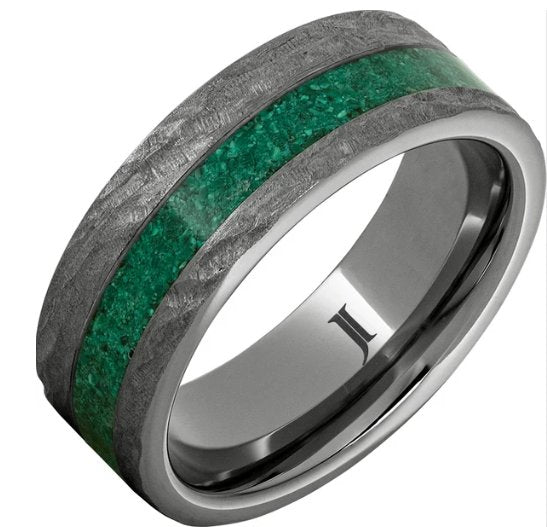
Ceramic wedding bands don't have to be a single color or have an uninterrupted surface. Some designs incorporate inlays, such as turquoise or wood, creating an interesting contrast against smooth ceramic. These details can add warmth, texture, or color to an otherwise minimalist design. Because each material may have different care requirements, check how to maintain the entire ring, not just its ceramic components.
Carbon Fiber
Carbon fiber stands out for its lightweight construction and distinctive texture. It's made from extremely thin carbon filaments embedded in a composite material, often creating a recognizable woven pattern. Forged carbon fiber offers a different appearance, with irregularly arranged fibers creating a more organic, marbled effect.
You can also find carbon fiber incorporated into wedding bands alongside other materials. For example, a metal interior may be paired with a carbon fiber exterior to create visual contrast and a different feel against the finger. The materials used and the way they're assembled can affect a ring's overall strength, comfort, and durability.
Meteorite

Meteorite wedding bands offer something particularly unusual: a material that originated beyond Earth. Certain iron meteorites feature geometric markings called Widmanstätten patterns, which form as metallic minerals cool extremely slowly over long periods. The resulting lines and shapes give each meteorite section its own distinctive appearance.
Rather than making an entire ring from meteorite, jewelers often incorporate it as an inlay surrounded by another metal. This allows the natural pattern to stand out while the surrounding material provides much of the band's structure.
Damascus Steel
Damascus steel is recognizable for the flowing patterns that run across its surface. Modern Damascus steel wedding bands are typically created by combining and manipulating different steel alloys, producing contrasting layers that become visible in the finished ring. Unlike the naturally occurring markings found in meteorite, these patterns are intentionally developed through metalworking techniques. The appearance of a Damascus steel ring can vary considerably depending on how it's made and finished.
Different surface treatments and decorative details give these bands their distinctive character:
- Twisted designs create intertwining lines that appear to move across the ring's surface.
- Wavy patterns produce flowing curves that give the metal a softer, more organic appearance.
- Chemical etching emphasizes the differences between metal layers, creating contrasting light and dark patterns.
- Polished finishes create a reflective appearance, while matte finishes give the patterns a more subdued look.
- Decorative inlays made from wood, meteorite, or other materials add texture and contrast to the design.
Choosing a wedding band is personal, and the material you choose can affect how your ring looks and feels for years. When you're ready to compare your options, visit Kennedy’s Jewelers to see our collection of wedding bands in Kansas City. Our experienced team can guide you through different designs and explain what sets them apart. We look forward to helping you find your wedding ring.